If you’re reading this, you’ve probably abandoned more planners than you can count.
You buy them with hope and excitement, convinced this time will be different. But by day three, the planner sits forgotten in a drawer, and you’re back to digital sticky notes scattered across your desktop.
Here’s the truth: You’re not the problem. The planner is.
Traditional planners aren’t designed for ADHD brains. They’re built for neurotypical executive function—something that works completely differently when you have ADHD.
This comprehensive guide will walk you through everything you need to know about finding, choosing, and actually using an ADHD daily planner that works with your brain, not against it.

Why Traditional Planners Don’t Work for ADHD Brains
Before we dive into solutions, let’s understand why traditional planners fail for people with ADHD.
The Executive Function Gap
ADHD affects executive function—the brain’s management system. Traditional planners assume you can:
- Estimate how long tasks take (time blindness is real)
- Remember to check your planner consistently
- Follow rigid scheduling without flexibility
- Prioritize 20+ items on a to-do list
- Maintain motivation without immediate rewards
But ADHD brains work differently. We need:
- Visual stimulation to maintain engagement
- Flexibility for hyperfocus and executive dysfunction days
- Simplified prioritization systems
- Built-in dopamine rewards
- Space for random thoughts (brain dumps)
The Overwhelming To-Do List Problem
Ever stare at a list of 30 tasks and feel paralyzed?
That’s decision paralysis—a common ADHD struggle. Traditional planners encourage massive task lists that trigger anxiety and avoidance.
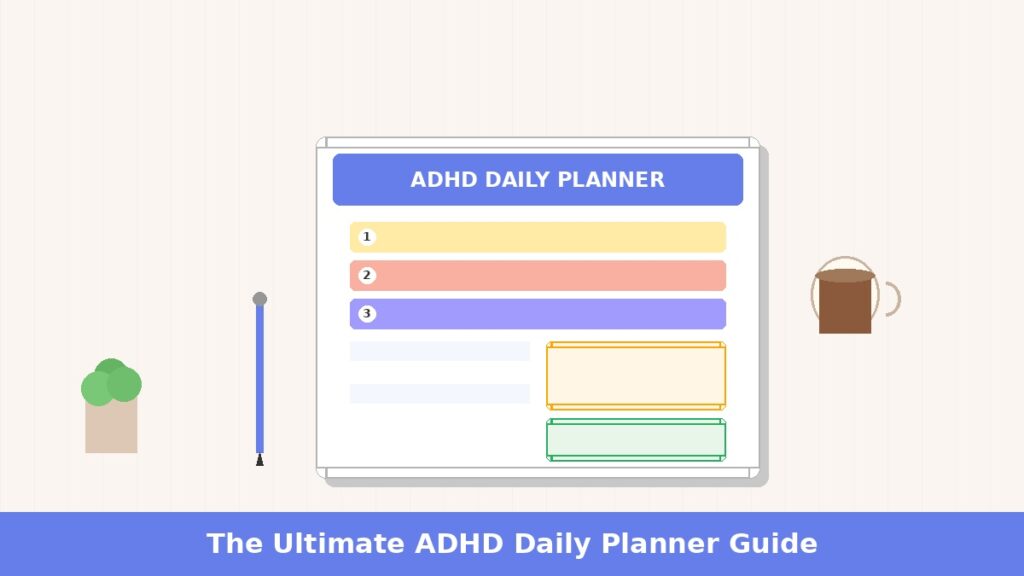
ADHD-friendly planners focus on the Top 3 Method: identifying just three priorities for the day. This makes starting feel possible instead of overwhelming.
The “Out of Sight, Out of Mind” Challenge
Object permanence issues are real with ADHD. If your planner isn’t visible and engaging, you’ll forget it exists.
This is why ADHD planners need:
- Eye-catching design and colors
- Visual cues and reminders
- Easy accessibility (digital syncing or always-on-desk placement)
Essential Features Every ADHD Daily Planner Must Have
Not all ADHD planners are created equal. Here are the non-negotiable features that make a planner actually work for ADHD brains:
1. Simplified Priority System (Top 3 Method)
The best ADHD planners limit daily priorities to three main tasks.
Why three? Because it’s:
- Manageable even on low-executive-function days
- Specific enough to provide direction
- Achievable, building momentum and motivation
- Forces authentic prioritization
Look for planners with clearly defined, visually distinct priority boxes—not endless blank lines that trigger analysis paralysis.
2. Flexible Time Blocking
Time blindness is a real ADHD challenge. But rigid hourly schedules backfire when hyperfocus kicks in or executive dysfunction days hit.
The ideal ADHD daily planner includes:
- Time blocks as guidelines, not strict rules
- Space to adjust and adapt throughout the day
- Visual representation of your day’s structure
- No guilt when things shift (because they will)
Think of time blocks as scaffolding for your day—helpful structure without feeling like a prison.

3. Brain Dump Space
Random thoughts derail focus constantly with ADHD. You’re working on one thing when suddenly—”Did I pay that bill? I should text Sarah. What’s that recipe I wanted to try?”
A dedicated brain dump section is crucial. It gives you a designated place to:
- Capture intrusive thoughts without losing focus
- Acknowledge ideas without acting on them immediately
- Reduce mental clutter and anxiety
- Return to captured thoughts later
This single feature can transform your ability to maintain focus throughout the day.
4. Habit Tracking (Without Overwhelm)
Building habits is harder with ADHD, but tracking them doesn’t have to be complicated.
Look for planners that track 5-7 daily habits maximum. Common ADHD-relevant habits include:
- Taking medication
- Drinking water (executive dysfunction affects basic self-care)
- Movement or exercise
- Meals eaten
- Mindfulness or meditation
Simple checkboxes work better than elaborate tracking systems that become another source of overwhelm.
5. Energy and Mood Tracking
ADHD symptoms fluctuate daily. Some days you’re unstoppable. Other days, brushing your teeth feels like climbing Everest.
Tracking energy levels helps you:
- Identify patterns in your executive function
- Plan demanding tasks during high-energy periods
- Show yourself grace on low-function days
- Recognize triggers that affect your symptoms
Look for simple 5-level energy trackers—nothing complicated that becomes another task to avoid.
6. Evening Reflection (Progress Over Perfection)
ADHD often comes with harsh self-criticism. An evening reflection section reframes your day with compassion.
Essential reflection prompts include:
- Gratitude (3 things, even tiny ones)
- One win (no matter how small)
- Tomorrow prep (reduce decision fatigue)
- Day rating (without judgment)
This practice builds self-awareness and self-compassion—both crucial for ADHD management.
7. Visual Engagement and Color Coding
ADHD brains respond to visual stimulation. Bland, text-heavy planners don’t stand a chance against TikTok’s dopamine rush.
Effective ADHD planners use:
- Color-coded sections for quick recognition
- Visual icons and symbols
- Varied layouts to maintain interest
- Space for stickers and customization
If your planner doesn’t spark joy (or at least interest), you won’t use it.
Digital vs Printable ADHD Planners: Which Is Right for You?
One of the biggest decisions you’ll face: digital or physical planner?
The answer isn’t one-size-fits-all. Here’s how to decide:
Digital ADHD Planners (iPad, Tablets, Apps)
Advantages:
- Always accessible: Your phone/tablet goes everywhere
- Unlimited pages: Duplicate templates endlessly
- Easier to maintain: Copy, paste, undo mistakes
- Cloud syncing: Access across all devices
- Notification reminders: Built-in alerts combat object permanence issues
- Environmentally friendly: No paper waste
- Searchable: Find past entries instantly
Disadvantages:
- Distraction risk: Notifications pull you away
- Screen fatigue: More screen time might not help
- Device dependence: Dead battery = no planner
- Learning curve: Apps require setup time
Best for:
Digital works great if you:
- Already use tablets or iPads regularly
- Forget physical items easily
- Like to adjust and reorganize frequently
- Want integration with calendars and reminders
Popular apps for digital ADHD planning include GoodNotes, Notability, and Noteshelf on iPad.

Printable ADHD Planners (Physical Paper)
Advantages:
- Tactile satisfaction: Physical writing engages the brain differently
- No distractions: Paper can’t buzz with notifications
- Visual presence: Sitting on your desk = visible reminder
- No battery needed: Always accessible
- Customizable with stickers/colors: Physical creativity is satisfying
- Better memory retention: Writing by hand improves recall
Disadvantages:
- Can be misplaced: Object permanence issues strike again
- Mistakes are messier: No undo button
- Limited pages: Need to print/buy more
- Requires storage space: Physical clutter
Best for:
Physical planners work great if you:
- Find screens overwhelming or exhausting
- Love the feeling of pen on paper
- Need a visible, tangible reminder
- Enjoy decorating and personalizing with stickers
The Hybrid Approach (Best of Both Worlds)
Here’s a secret: you don’t have to choose!
Many successful ADHD planners use both:
- Digital for scheduling: Use calendar apps with alerts for appointments
- Physical for daily planning: Use paper for your Top 3 and brain dumps
- Best of both: Get a brain-friendly daily planner that works both digitally and in print—one PDF that imports to iPad or prints unlimited copies
This flexibility lets you adapt based on your needs each day.
How to Actually Stick to Your ADHD Planner (This Time)
Having the perfect planner means nothing if it sits unused. Here’s how to make planning a sustainable habit:
1. Start Ridiculously Small
Don’t try to plan your entire life on day one.
Start with:
- Week 1: Just write your Top 3 priorities daily
- Week 2: Add time blocking
- Week 3: Start using brain dump
- Week 4: Add habit tracking
Building gradually prevents overwhelm and increases success rates.
2. Anchor Planning to Existing Habits
Don’t create a standalone planning time—attach it to something you already do daily.
Examples:
- Plan while drinking morning coffee
- Review during lunch break
- Evening reflection while brushing teeth
Habit stacking makes new routines stick better.
3. Keep Your Planner Visible
Out of sight = out of mind with ADHD.
For digital planners:
- Keep the app on your home screen
- Set calendar reminders to check it
- Widget it to your lock screen
For physical planners:
- Always on your desk (not in a drawer)
- Next to your coffee maker
- With your keys/wallet you can’t leave without
4. Embrace Imperfection
You will miss days. You will forget to check it. Tasks will spill over.
This doesn’t mean you failed.
ADHD planning isn’t about perfection—it’s about reducing chaos and overwhelm. Even using your planner 50% of the time is a huge improvement over 0%.
5. Build in Dopamine Rewards
ADHD brains need immediate rewards. Create systems that provide quick satisfaction:
- Use satisfying pens or highlighters
- Add stickers when you complete tasks
- Create streak challenges (but don’t beat yourself up for breaking them)
- Celebrate completing your Top 3 with a favorite snack or activity
Make planning feel rewarding, not punishing.

6. Review and Adjust Weekly
Set aside 10 minutes every Sunday to:
- Review what worked this week
- Notice patterns in your energy and productivity
- Adjust your approach for next week
- Celebrate wins (even tiny ones)
This reflection builds self-awareness and helps you optimize your system continuously.
5 Common ADHD Planning Mistakes (And How to Avoid Them)
Mistake #1: Over-Planning Everything
The Problem: You spend 2 hours planning and have no energy left to actually do anything.
The Fix: Limit planning to 10-15 minutes maximum. Focus only on your Top 3 priorities and rough time blocks.
Mistake #2: Being Too Rigid with Your Schedule
The Problem: You schedule every minute, then feel like a failure when hyperfocus or executive dysfunction derails everything.
The Fix: Build in buffer time. Schedule only 50-70% of your day, leaving room for adjustment.
Mistake #3: Comparing Your Planner to Instagram-Perfect Spreads
The Problem: You see beautifully decorated planners online and feel yours is inadequate.
The Fix: Function over aesthetics. A messy, used planner beats a pristine, abandoned one every time.
Mistake #4: Not Customizing for Your ADHD
The Problem: You force yourself to use a planner that doesn’t match your brain.
The Fix: Experiment! Cross out sections you don’t use. Add sections you need. Make it yours.
Mistake #5: Giving Up After One Bad Week
The Problem: You miss a few days and declare planning “doesn’t work for you.”
The Fix: Expect inconsistency. Just open your planner and start fresh—no guilt, no catching up, just today.
Best ADHD Planners for Specific Needs
For Working Professionals with ADHD
Look for planners that include:
- Professional, minimalist design
- Meeting notes sections
- Project tracking capabilities
- Weekly overview for deadlines
Digital planners work especially well for professionals who attend virtual meetings and need calendar integration.
For College Students with ADHD
Student planners should have:
- Assignment tracking
- Study session time blocks
- Exam countdown sections
- Class schedule integration
Semester-dated planners or undated ones provide flexibility for academic calendars.
For Parents with ADHD
Parenting with ADHD requires planners with:
- Family schedule sections
- Meal planning space
- Kids’ activities tracking
- Self-care reminders (crucial!)
Keep it simple—you’re already managing everyone else’s schedules.
For Entrepreneurs with ADHD
Business owners need planners with:
- Revenue/finance tracking
- Client project sections
- Goal-setting space
- Flexibility for irregular schedules
Many entrepreneurs benefit from hybrid systems combining digital calendars with physical daily planning.
Where to Find ADHD-Friendly Daily Planners
Printable PDF Planners
Digital downloads offer instant gratification (perfect for ADHD!) and unlimited printing.
Advantages:
- Immediate download—no waiting for shipping
- Print only pages you need
- Try before committing to expensive physical planners
- Often more affordable ($5-$15 vs $30-$50)
If you’re ready to try a proven system, check out this ADHD-friendly productivity planner designed specifically for neurodivergent brains. It works both as a printable PDF and imports directly to iPad apps like GoodNotes and Notability.
Physical Pre-Made Planners
Some people prefer bound planners:
- Planner Pad: Funnel system for prioritization
- Passion Planner: Goal-oriented with reflection
- Erin Condren LifePlanner: Highly customizable
Cost: $25-$60. Shipping time: 1-2 weeks.
Digital Planner Apps
Popular ADHD-friendly apps:
- GoodNotes (iPad): Import PDFs, unlimited duplication
- Notability (iPad): Audio recording for meetings
- OneNote: Free, works on all devices
- Structured App: ADHD-specific time blocking
DIY and Customizable Options
For those who need complete control:
- Notion templates: Fully customizable databases
- Bullet journaling: Create your own system from scratch
- Google Docs/Sheets: Free and accessible anywhere
Your ADHD Planning Journey Starts Today
Finding the right ADHD daily planner isn’t about perfection—it’s about progress.
It’s about waking up and feeling capable instead of overwhelmed.
It’s about those small wins: remembering appointments, completing your Top 3 priorities, capturing brilliant ideas before they disappear, showing yourself compassion on hard days.
The best ADHD planner is the one you’ll actually use. Whether that’s digital on your iPad, printed and sitting on your desk, or a hybrid of both—the key is finding what works for your unique brain.
Start small. Be patient with yourself. Adjust as you go.
Your ADHD brain isn’t broken—it just needs the right tools.
Ready to try a planner designed specifically for ADHD brains? Check out our brain-friendly daily planner that works both digitally and in print, features the Top 3 Method, brain dump space, and all the ADHD-friendly features discussed in this guide.
You’ve got this. One day at a time. One Top 3 at a time.